Science

You might've heard that your gut plays an important role in your overall health & well-being, but I'm convinced you aren't even close to fully appreciating what the impact is for you.
Every year more evidence keeps pouring in about the importance of gut health, and the many different ways how the gut affects every aspect of your health and well-being.
Elsavie is a spin-off of Center of Food and Fermentation Technologies (TFTAK) - a contract R&D institution located in Estonia. TFTAK has its main focus on developing innovative solutions for the food and biotech industries, both locally as well as for world calibre industry names.
It's a forward-thinking highly innovative powerhouse and since it was established in 2004 has experience in collaborations across the globe, covering a wide area of research topics: from healthy functional foods, plant-based meat and dairy alternatives, consumer science and sensory analysis, to bioprocess optimization and bacteria cultivation, and studies of nutrition, dietary fibres, and microbial communities.
Elsavie fiber supplements and the microbiome testing service have been developed hand-in-hand during years of research at TFTAK.

Elsavie fiber supplements

In 2014, a population wide study[1] conducted in collaboration with TFTAK and the Estonian National Institute for Health Development (TAI) found that on average Estonian people eat about half of the nationally recommended amount of fibers. Similar results have also been reported all over Europe [2] and in the US where an estimated 95% of adults and children don’t meet the recommended daily fiber intake [3].
According to European Commission Science Hub[4] fibers have several benefits on people’s overall health:
Give you a satiated feeling for a longer period of time
Help to maintain healthy body weight
Help to smooth your digestion
Relieve and prevent constipation, as well as help to treat diarrhea
Prevent inflammation, both in the gut as well as in overall body
Prevent irritable bowel syndrome (IBS)
Lower the risk of colon cancer, IBD, metabolic and cardiovascular diseases
Help to maintain normal blood pressure
Help to keep your blood sugar level balanced
Help you rid your body of superfluous cholesterol
Based on years of research of gut microbiome associations with dietary fibers, we have developed a fiber supplement line to help people meet the needs of fiber consumption and the associated health benefits. In addition to the amount of fiber consumed, it is essential to get different types of fibers. Therefore our supplements contain up to 6 different types of fibers, such as:
  • beta-glucans from oat bran
  • psyllium
  • arabinoxylan from rye bran
  • resistant-starch-like fiber from polydextrose
  • inulin from chicory root
  • pectin from citrus fruits

How to use Elsavie fiber supplements?

The fiber supplements are tasteless and can be easily combined with food.

Mix into, dairy products or, smoothie
Add to porridge, cookie or other pastry dough.
Elsavie fiber supplements have very high fiber content, 48%-72% depending on the product. RAs rapid changes in diet may initially lead to an uncomfortable feeling in the stomach. If not used to eating a fiber-rich diet, the supplements may cause bloating and changes in bowel habits. Therefore, we strongly recommend adjusting the daily dose over time to suit your body, starting with 5g and increasing the dose over the weeks. Everybody is different and we have different needs, so keep an eye on how you feel.
As soluble fibers bind water, it is essential to drink water together with fiber-rich foods as well as Elsavie fiber supplements. We recommend drinking at least a large glass of water (400 ml) with your fibers.
We recommend to drink at least a large glass of water (400 ml) with your fibers.
Keep in mind, that food supplements are not a substitute for a balanced diet and healthy lifestyle.

Microbiome pipeline and technology

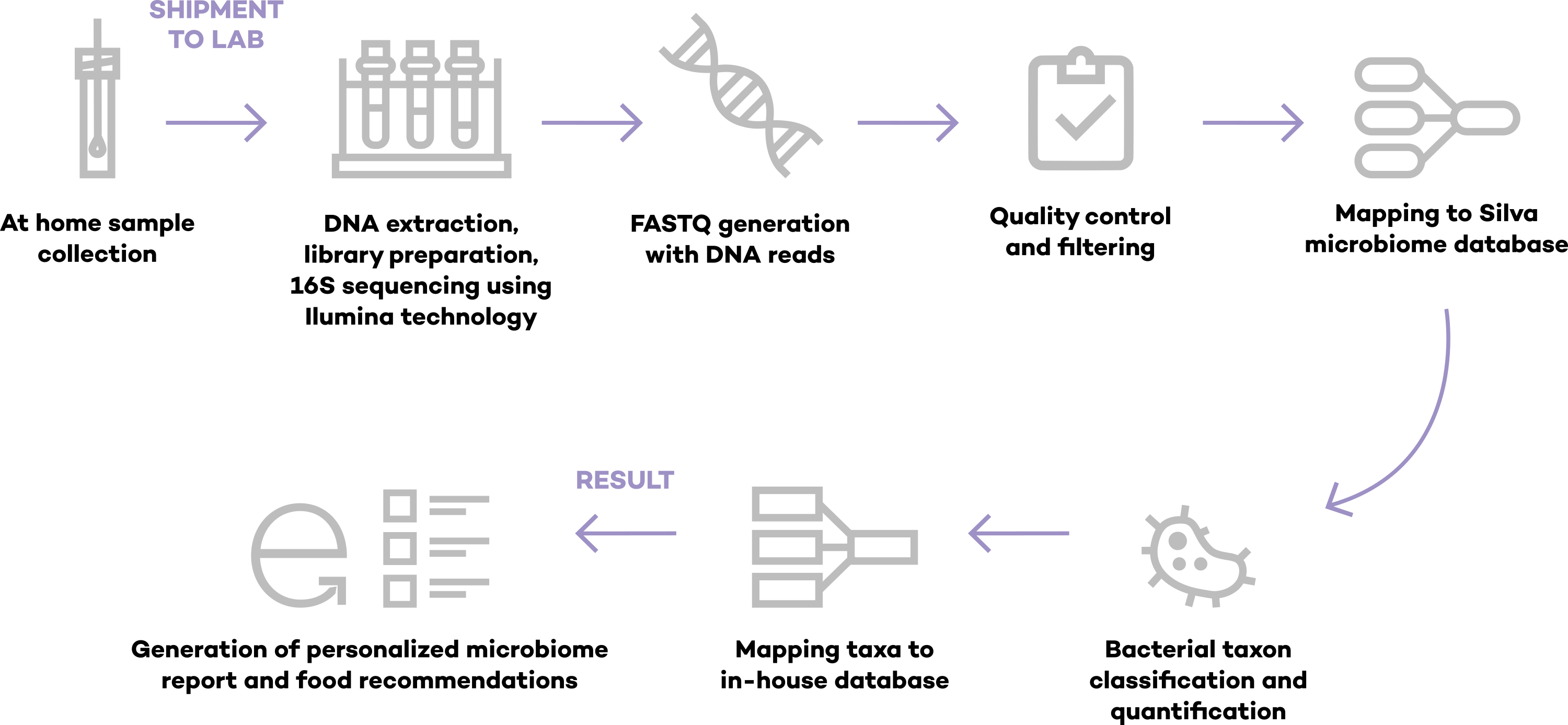
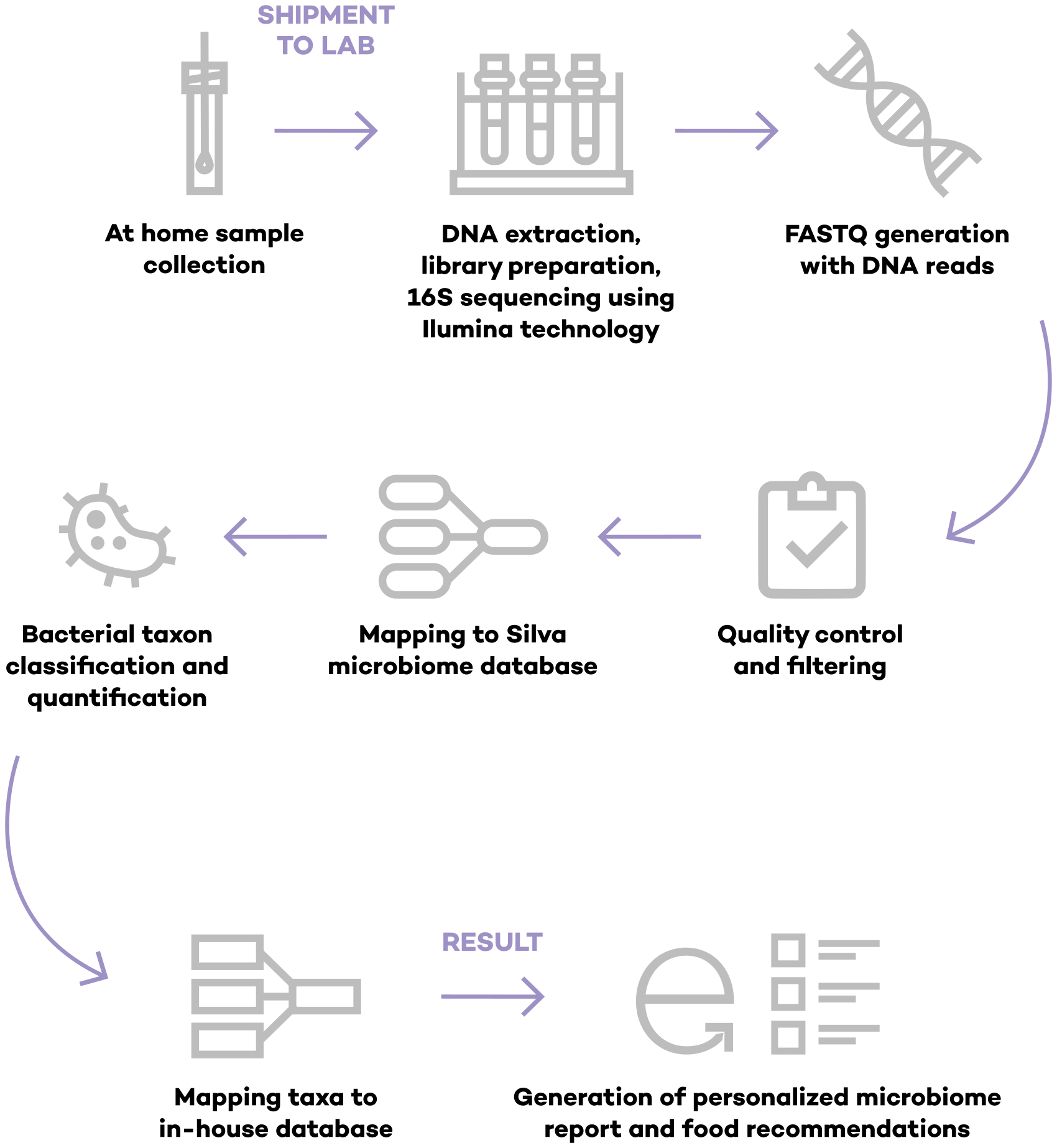
Our in-house metagenomic pipeline, combining 16S rRNA sequencing technology, bioinformatic processing and vast databases enables us to provide a state-of-the art microbiome testing service.
We have built our algorithms on the extensive databases based on our own in-house research as well as the latest scientific literature.
Our databases contain information such as:
  • Bacterial taxonomic hierarchy
  • Bacterial metabolic capacity
  • Wide range of health biomarkers (e.g metabolism, inflammatory indicators, gut health markers)
  • Food composition, mainly focusing on different types of fibers
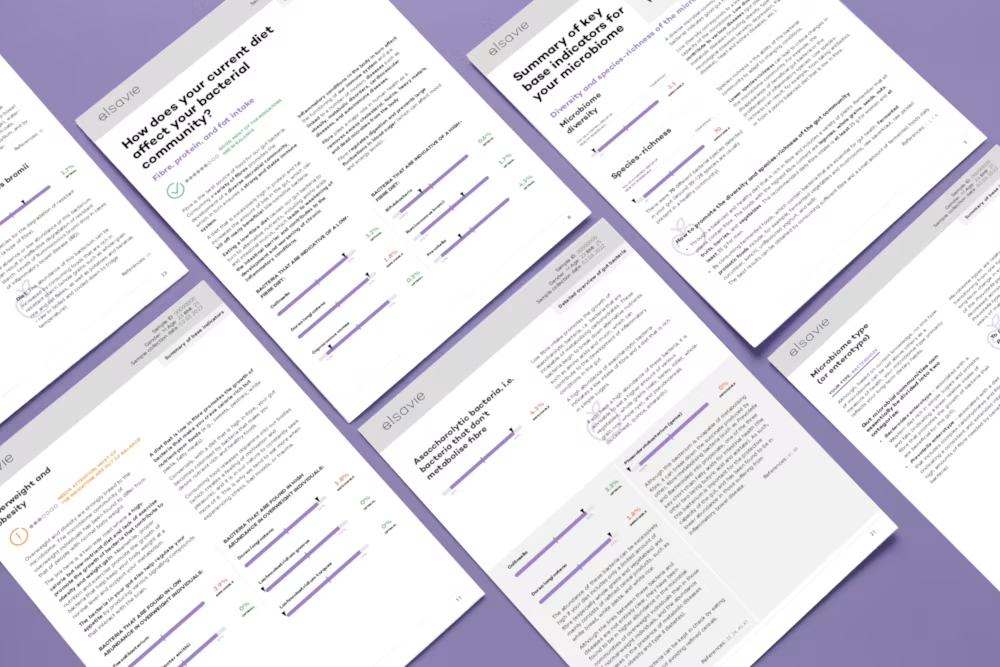
As a result of the microbiome test you’ll receive a a thorough, but easy-to-read report, which contains the following:
  • Characteristics of your microbial community, such as microbiome diversity, pro-inflammatory bacteria, butyric acid producing bacteria, bacteria associated with protein and fat consumption, bifido- and lactobacillus as probiotic bacteria, resistant starch degrading bacteria, asaccharolytic bacteria, sulfate-reducing bacteria
  • Overview of the abundance of the most important bacteria associated to different health biomarkers
  • Your food recommendations based on composition of your gut microbial community
  • Appendixes for more comprehensive information about your microbiome

Scientific advisory board

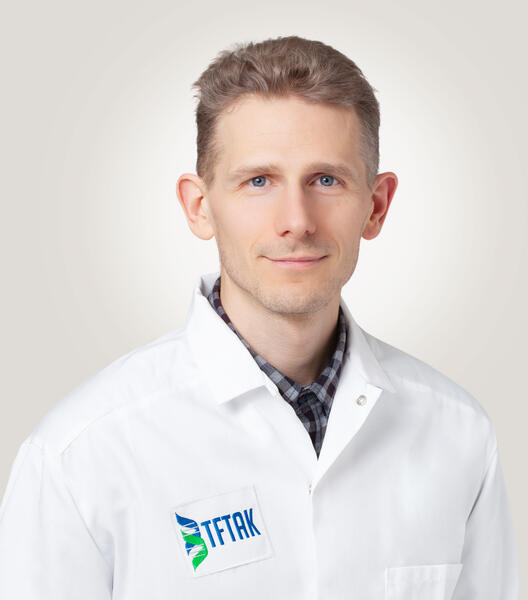
Prof. Raivo Vilu, PhD

Systems biology

TFTAK & TalTech
Selection of our projects and publications

  • Pihelgas, S.; Ehala-Aleksejev, K.; Kuldjärv, R.; Jõeleht, A.; Kazantseva, J.; Adamberg, K. (2024). Short-term pectin-enriched smoothie consumption has beneficial effects on the gut microbiota of low-fiber consumers. DOI: https://doi.org/10.1093/femsmc/xtae001.
  • Adamberg, K.; Jaagura, M.; Aaspõllu, A.; Nurk, E.; Adamberg, S. (2020). The composition of faecal microbiota is related to the amount and variety of dietary fibres. International Journal of Food Sciences and Nutrition. DOI: 10.1080/09637486.2020.1727864. - In collaboration with TAI
  • Adamberg, K; Kolk, K; Jaagura, M; Vilu, R; Adamberg, S (2018). The composition and metabolism of faecal microbiota is specifically modulated by different dietary polysaccharides and mucin: an isothermal microcalorimetry study. Beneficial Microbes, 9 (1), 21−34. DOI: 10.3920/BM2016.0198.
  • NSP67 "Mikrobioomianalüüsil põhineva toitumisnõustamise meetodite ja algoritmide arendus (1.03.2017−30.11.2017)", Kaarel Adamberg, AS Toidu- ja Fermentatsioonitehnoloogia Arenduskeskus.
  • Adamberg, S.; Sumeri, I.; Uusna, R.; Ambalam, P.; Kondepudi, K. K.; Adamberg, K.; Wadström, T.; Ljungh, Å. (2014). Survival and synergistic growth of mixed cultures of bifidobacteria and lactobacilli combined with prebiotic oligosaccharides in a gastrointestinal tract simulator. Microbial Ecology in Health and Disease, 25, 1−9. DOI: 10.3402/mehd.v25.23062.